



Transparency Act Report
This report covers First Seafood AS's activities and responsibilities under the Norwegian Transparency Act and provides an overview of the company's value chain, risk assessments and measures to ensure human rights and decent working conditions. It covers the period from 1 January to 31 December 2025.
Contact person: Andreas Sundnes, Managing Director, First Seafood AS
Email address: andreas.sundnes@firstseafood.no
The report is signed by the Managing Director and the Board of Directors and is anchored within the management team of First Seafood AS.
Information: All requests for information can be directed to post@firstseafood.no
Introduction
First Seafood AS is a leading supplier of seafood products, with a particular focus on processed salmon. The company was established in 2014 and has been part of the Insula Group since 2016, a group dedicated to sustainable seafood in the Nordic region and internationally. First Seafood primarily exports to processors worldwide, while the Norwegian market is served through wholesalers and meal-kit providers with a broad range of seafood products.
The Insula Group's overall objective is to increase seafood consumption in the Nordic region while working to become a leading supplier of sustainable seafood. Through continuous investments in fish and seafood processing, Insula aims to promote healthier eating habits, reduce climate impact, and ensure profitable growth. First Seafood contributes to this vision by focusing on global markets and promoting seafood products to processors and consumers worldwide.
First Seafood is owned by Insula, which is part of Kverva, a privately owned Norwegian investment company.
#WeLoveSeafood
30.6.2026
Andreas Sundnes, Managing Director
General information about First Seafood
Head office address: Professor Birkelands vei 30 B, 1081 Oslo, Norway
Number of employees: Approximately 150
Contact person: Andreas Sundnes, Managing Director, First Seafood AS
Email address: andreas.sundnes@firstseafood.no
Website where the report is published: www.firstseafood.no and www.frysehuset.no
Organization
Head office: Oslo, Norge
Other offices: Bergen og Ålesund
Production facilities: Kongsvinger and Godvik (Bergen)
First Seafood AS operates two state-of-the-art production facilities in Norway: one in Kongsvinger and one in Godvik, Bergen. These facilities are equipped with advanced processing technology, giving the company a significant competitive advantage compared to other Norwegian exporters. This technology enables First Seafood to produce high-quality seafood efficiently, strengthening the company's position both domestically and internationally.
In 2025, First Seafood AS also owned a factory in Hvide Sande, Denmark (sold on 1 June 2026), which is included in this report. The Hvide Sande facility was acquired to create closer proximity to important European markets. In early 2026, it was decided to focus operations on the two production facilities in Norway.
The company has sales offices in Oslo and Bergen. The Oslo sales team focuses on seafood sales in the Nordic market, while the Bergen office handles salmon exports to customers worldwide.
This report covers First Seafood AS's activities and responsibilities under the Norwegian Transparency Act and provides an overview of the company's value chain, risk assessments and measures to ensure human rights and decent working conditions.
The report is signed by the Managing Director and the Board of Directors and is anchored within the management team of First Seafood AS. It covers the period from 1 January to 31 December 2025.
Value Chain
First Seafood AS has a comprehensive value chain covering farming, processing and distribution of seafood products to both domestic and international markets. Our main suppliers are reputable aquaculture companies providing our primary raw material, salmon.
The company also imports other fish species for the wholesale market and maintains long-standing, solid relationships with foreign suppliers. First Seafood does not operate its own transport services but is responsible for transportation from our factories until the products are received by our customers.

Information Requests
First Seafood is committed to responding to any request for information related to the Transparency Act, human rights and/or working conditions. During the year, the company received and responded to several inquiries concerning the Transparency Act, human rights and working conditions. Requests are primarily handled by the Quality Department in line with the company's commitment to transparency.
All requests for information can be directed to: post@firstseafood.no
Due Diligence Assessment
Due diligence under the Transparency Act is a continuous process designed to help companies identify risks related to human rights and labour rights with the purpose of preventing, mitigating or eliminating such risks. Due diligence is a key element of responsible business conduct and forms a central part of the OECD Guidelines for Multinational Enterprises and the UN Guiding Principles on Business and Human Rights.
Risk assessments for 2025 were conducted by the management team with contributions from the Quality Department, production facilities, finance and the Managing Director.
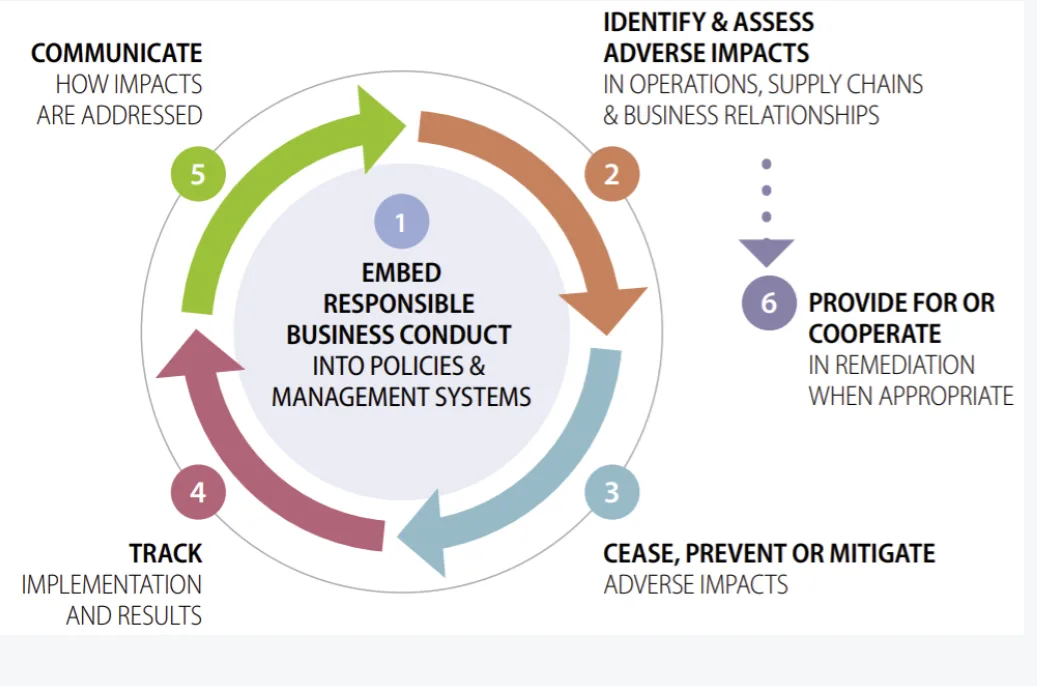
Processes Relating to Human Rights and Working Conditions
We are committed to respecting human rights and decent working conditions both within our own operations and throughout our supply chain. Our approach is governed by both internal and external policies and procedures.
External Conditions
First Seafood adheres to Insula's Supplier Code of Conduct, which is based on international standards including the Universal Declaration of Human Rights, the ILO Core Conventions and the UN Global Compact. It outlines the minimum requirements expected from suppliers and forms part of the procurement process.
Compliance with the Supplier Code of Conduct is monitored primarily through assessments and dialogue. Supplier audits are conducted based on risk.
Countries classified as high-risk countries according to BSCI are considered to have elevated risks related to unethical working conditions. Examples include China, Vietnam and Thailand. To mitigate such risk, social certification (Sedex/BSCI or equivalent) is required for suppliers located in these countries.
First Seafood purchases most of its raw materials from Norwegian aquaculture companies. These companies operate in countries considered to have a low risk of violations of human rights and labour rights and are among the strongest performers in sustainability reporting and compliance work in Norway. However, violations can occur and the fisheries sector is known to present certain risks, making strong supplier dialogue and industry knowledge essential.
For imports, First Seafood has one supplier located in the high-risk country of China. This supplier is large, well-established and supplies many Western countries with strict requirements. We consider the supplier compliant with the Code of Conduct, and cooperation was further strengthened during 2025.
Insula's Supplier Code of Conduct applies throughout the Group and was most recently updated and approved by Insula's CEO in 2025.
Link to Insula's Supplier Code of Conduct (English): Insula Supplier Code of Conduct
Findings – External Conditions
No actual adverse impacts were identified through the due diligence assessments.
In August 2025, First Seafood carried out supplier visits and follow-up activities at seven production facilities in Vietnam (Cà Mau, Long Xuyen, Khánh Hòa and Lâm Đồng). The purpose was to verify production conditions, quality and supply chain compliance as part of the company's ongoing due diligence activities.
The facilities visited are established export producers holding relevant certifications, including BRC, ASC and MSC, along with relevant catch certificates. Visible implementation of internal ethical guidelines was also observed during the visits.
Based on reviews of production, documentation and on-site audits, no material non-conformities relating to human rights or working conditions were identified. Improvement opportunities identified mainly related to product quality and packaging.
First Seafood therefore considers the Vietnamese suppliers stable and low-risk in the assessed areas. Monitoring continues through ongoing controls, local representatives and third-party verification where deemed necessary.
Transport is a very important supplier category for First Seafood. Many transport companies are used, mainly large and reputable global operators. However, extensive use of subcontractors within the industry means full visibility of the actual service providers is difficult. First Seafood requires transport providers to sign the company Code of Conduct.
First Seafood has a limited proportion of IT users compared to the total number of employees. IT hardware is a well-known high-risk area concerning human rights and labour rights. Insula's contracted IT hardware supplier has identified potential issues involving conflict minerals, cobalt and certain indigenous groups in Congo and China as part of its own due diligence process. Suppliers are TCO-certified, approved by Insula and assessed regularly.
Scope – Internal Conditions
First Seafood follows Insula's Internal Code of Conduct, which defines the ethical standards and values expected from all employees, managers, board members and business partners.
The Code covers anti-corruption, anti-discrimination, health and safety, freedom of association, fair wages and working hours.
All employees have written employment contracts and sign the Code upon employment.
Employee representatives for health and safety have been appointed at all factories. Sick leave and workplace incidents are recorded, managed and reported in the Annual Report.
An employee survey was conducted in 2025 with increased participation. Active follow-up of results continues in order to improve the company and its processes.
Insula's ethical guidelines apply to the entire group and were last published, updated and approved by Insula's CEO in December 2024. The guidelines can be read in all local languages within Insula; Swedish, Norwegian, Danish as well as in English.
Link to Insula's ethical guidelines (English): Insula Ethical guidelines
Findings – Internal Conditions
No actual adverse impacts were identified through the due diligence assessment.
Pay conditions were reviewed during 2025 in accordance with the Equality and Anti-Discrimination Act. No non-conformities were identified.
Whistleblowing Protection Act
First Seafood uses the external whistleblowing system “Mitt Varsel”, implemented in 2024.
The system enables anyone to anonymously report concerns regarding human rights, decent working conditions or violations of internal or external ethical guidelines to an independent third party.
No whistleblowing cases related to the Whistleblower Protection Act were received within Insula during 2025.
Actions for 2026
- Review employee salary conditions (ongoing activity)
- Follow-up of transport subcontractors
- Follow-up of new import suppliers
- Audit programme for selected Asian suppliers (risk-based)
- Assess SMETA certification of own operations
Approved by the Board of Directors of First Seafood AS
30.6.2026
Børge Klungerbo (Chairman of the Board)
Thomas Ljungqvist (Board Member)